
Everybody can be an alpha, apparently, which makes me wonder what the word alpha is supposed to mean once every one of you gets there. I guess I’ll be the last inferior man. That’s how it works, no?
As an offer or an ideal, though, it makes sense. Be the alpha. Are you the alpha in your life? Good for you, buddy! Who’s to say I ain’t? Or you aren’t? The exceptional position can be promised to all of us because each of us is invited to imagine occupying it alone. The seller, whoever they are, gets a market: you, me, everybody else who falls for the promises. We get a possible future, an aspiration, and a title we can give ourselves. I’ve met so many “alphas” in my life, which is interesting and a little suspicious, because the sellers of this ideal have no need to distribute actual authority as widely as they distribute the promise of it. Or perhaps some of us are selling the idea to ourselves to compensate for something we feel we lack, with no outside seller involved.
People usually point to wolf packs to make this hierarchy sound natural, but David Mech, the dude whose book helped popularize the alpha idea, later explained that most wild wolf packs are actually families. The adults generally lead because they are the parents. Look at the photograph at the top. Those wolves are behind glass, in a fluorescent room, with a wolf poster on the wall. Captive. The familiar image of a permanent contest for the top came largely from watching animals in conditions like that, not from wild families. Mech on the alpha concept, his 1999 paper. An observation about captive wolves became a fable, and sellers turned that fable into something you and I could consume. They captured the idea by turning a description into a ladder they could sell.
That movement interests me more than the wolf. By fable, I mean a story that offers us a lesson about how to live. The alpha thing is one of my favorites because it offers a theory of power in which being above other people is the achievement, then invites each of us to pursue that achievement separately, as though each of us could decide our own rank arbitrarily! It’s so silly! The story also works against our collective intelligence because the possibility that we might acquire power by organizing together, as a wild wolf family does, becomes difficult to see from inside this hyper-individualistic alpha-being story. If being powerful means never needing anybody, working together starts to look like weakness. Divide and conquer begins to look almost self-service: we perform the division ourselves, and the strength available to us through cooperation becomes almost impossible to see. In this particular fable, we are asked to pursue power in a way that can leave us with less of it together. And then we scratch our heads and think, man, how the fuck did we end up and keep ending up here? What the fable hides is how much we depend on each other.
We ARE social creatures. We rely on other people and their knowledge and work to do things we could never manage alone. I almost want to reserve the real alpha label for anybody who can live comfortably off-grid, but even that fantasy arrives with tools, knowledge, and infrastructure made by other people. One of the main achievements of our intelligence is that it lets us invent shared rules, assign responsibilities, and keep arrangements running after their founders are dead. An office begins as an idea and becomes a position somebody can occupy centuries later. A stranger can accept money from us because other strangers will accept it from them. Michael Tomasello on human culture. The arrangement can outlive all of us, which is one reason we can keep repeating the same mistakes across generations.
An idea can live inside one head and then a fable can carry it between heads. When enough of us act on the same agreements, the idea becomes an expectation, then routines, roles, rules, and money. Now the idea has hands. It can open a door, move money, keep somebody out, or build. Repeated enough, shared, and expected of us, ideas become part of our systems. The fable reaches the gate through human hands.
An actor does not have to stand at the gate to use it. Control over the rules is one kind of power, and control over the idea that tells us what those rules mean is another. You do not have to separate us by force if you can sell us a story that makes separation feel like achievement, and we will do some of the work ourselves.
A captured idea is an idea we use to understand or organize life, bent toward somebody else’s advantage, then sold back to us as common sense, morality, nature, or personal ambition. Division is the fingerprint of that, a problem we share becomes a contest between us, a condition imposed on us becomes a judgment about our character, and the person beside us becomes the enemy while the actor benefiting from the arrangement disappears from view. Repeated often enough, the story enters hiring rules, lending formulas, feeds, classrooms, and laws.
I still have to prove each case. To call an idea captured, I have to name the idea, the actor or beneficiary, what the division accomplishes for them, and how the story enters our behavior or rules. Otherwise, I may just be giving my dislike of an institution a more impressive name. Some systems were redirected toward exploitation; others were built for domination from the beginning. Those are different histories, even when both teach us to enforce the arrangement against one another. Sometimes we can name the actor, and sometimes we can identify only the beneficiary or the mechanism. Credit ratings show a different part of the pattern: not division between us, but an arrangement redirected when issuers began paying for their own ratings, so the cost of that flip still returns as a story about risk, prudence, and who deserves a loan. Social feeds, food formulation, and gambling design are siblings of the same family of moves: an arrangement we use, redirected, with the cost turning back into a story about us.
By the time we apply for a loan, accept a job, or open a feed, many of these decisions have already been made. We arrive looking for something useful and meet an arrangement with a history we may never have had a reason to examine. The promise can still sound familiar while the rules serve interests we have not considered.
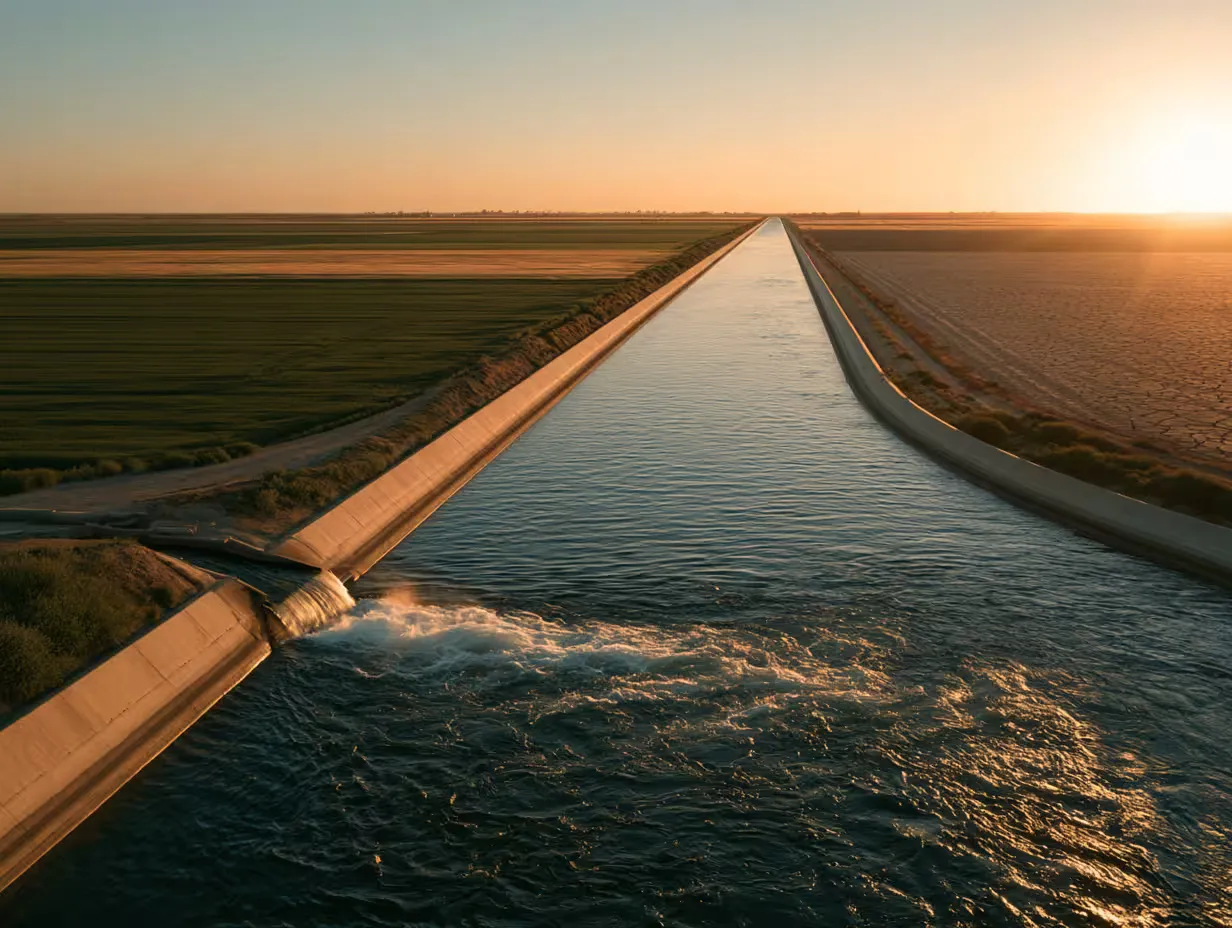
Look at that canal. Those of us farming upstream can take water before it reaches those of us downstream, but we may need the downstream farmers’ help maintaining the shared works. That dependence gives us a reason to bargain despite our unequal positions. Elinor Ostrom and Roy Gardner studied how arrangements like this can sustain cooperation. The people farther from the water can have a claim that matters because the people nearest it need their contribution. Ostrom and Gardner, 1993.
Suppose we improve the construction. Permanent structures can reduce the labor needed for maintenance, which sounds like something worth welcoming. If we farm downstream, though, that improvement can also reduce our upstream neighbors’ need for our help. Wai Fung Lam’s research on irrigation in Nepal examined how technological improvements could weaken that bargaining relationship. The engineering improvement could increase the advantage of the people already nearest the source. We would have a better-built canal and a different distribution of power among the people using it. Lam, 1996.
The water problem and the power problem were connected all along, and what looks like a straightforward improvement from our end of the canal may remove a neighbor’s means of negotiating with us, we can welcome the reduction in work without noticing. If we are the ones downstream, being told to work harder would leave the lost bargaining power unaddressed. Our position in the arrangement matters to both what we can do and what we are likely to notice. The same shape shows up when policy sells “work harder” as the fix — more years before retirement, fewer holidays, fewer breaks — while better infrastructure and tighter rules leave the people at the end of the line with less room to bargain. I write these things, and they sound theoretical and abstract, but this is not fucking abstract at all.
Then the second capture becomes possible. Our intelligence turns shared ideas into useful instruments: schools, markets, governments, platforms, credit systems, and all the other arrangements we build so we can function together. A few people can gain control of one of those instruments and redirect it toward themselves. The captured idea helps them divide us and explain why the new arrangement is natural, deserved, or our own choice. The captured instrument then gives that idea more reach. The story helps capture the system and the system helps distribute the story, that’s the loop.
The person off-grid still arrives with other people’s tools. This is where the word actually sits, if we are going to keep it: the people and organizations with power over the terms. What qualifies, what gets paid, who may enter, whose objection can change a decision. Some of us hold that power in one part of life and have almost none in another. An institution can give one of us extraordinary reach, a contract or a policy can change conditions for thousands of strangers we never meet, and the part we manage can look successful while costs appear elsewhere. Someone kinder can take over and find the same permissions waiting for them.
The alpha fable works this way. It takes our ordinary desire for agency, protection, and belonging and turns the person beside us into a rival for rank. The people who sell that story can gain attention, money, votes, customers, cheaper labor, or compliance, depending on where they sell it. We receive the feeling of power, they receive people less likely to recognize a shared interest or act together, and the fable divides us.
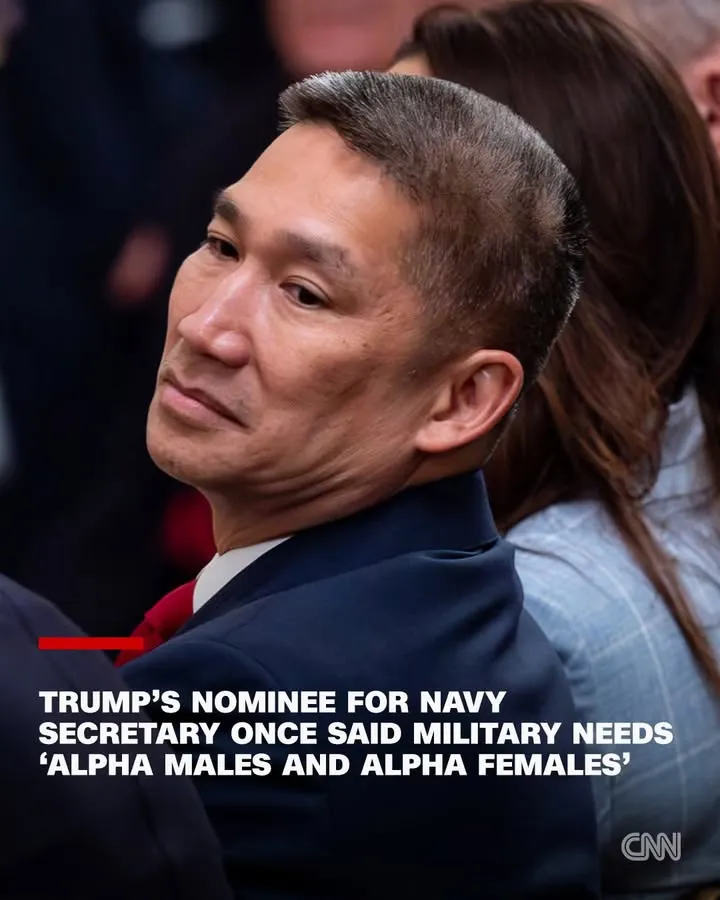
CNN, September 2, 2026. Hung Cao, Trump’s nominee for Navy secretary, said during a 2024 Senate debate that the military needed “alpha males and alpha females.” Source.
Lmao. There it is. A fable pulled from captive wolves, now being used by a nominee for Navy secretary to describe who belongs in an actual military. The idea has hands, and apparently a confirmation hearing. That laugh is the contempt the essay is arguing against. I felt it. Naming it matters, because the next easy step is to walk away cleaner than I am.
The fable does not stay on a podium. It settles into how men are taught to live.
We men still need intimacy, help, vulnerability, and other people, and a masculinity built around self-reliance and invulnerability does not remove those needs, it represses them, so the need stays and the man stops acting on it. Living that way, against what we actually are, produces resentment, and the resentment then justifies more distance, which produces more resentment, until the story about not needing anybody starts coming true in the only way it can, by costing us the people who would have shown up. A 2024 review of research on masculinity and loneliness found that self-reliance could take priority over social and emotional support. Review of masculinity, loneliness, and social connectedness. The alpha fable did not create every lonely man, but it gives loneliness a place to hide and offers an artificial tribe to belong to. Men inside it can call ordinary human needs weakness and perform independence, because that is all it is: performed, not actual, independence. Then we carry that lesson into friendships, families, workplaces, and politics until our performance of independence becomes everybody’s problem. Who foots the bill? All of us.
I valued my autonomy more than my deepest relationships for a long time. Unbelievable. No wonder I was always lonely; I had designed my life around that. The fable did not invent that loneliness, but it gave me a noble name for it.
Millions of us cannot each be the single alpha promised by a hierarchy, but we can still feel as though the title describes us. That contradiction creates discomfort. We can question the story, or we can decide we have not proven ourselves yet and perform harder. Sellers are waiting inside that second answer. Once masculinity becomes a test we can never finish, nearly anything can be sold as evidence that we are passing: a gun, a drink, a course, a subscription, a ticket to an alpha event, whatever the fuck. Experiments have found that threats to masculinity can increase men’s attraction to firearms, and a 2024 review found that digital alcohol marketing ties alcohol to gendered identities and amplifies hegemonic masculinity. Masculinity threat and attitudes toward guns. Review of gendered digital alcohol marketing. The seller gets paid every time we try to settle the contradiction with another purchase.
I know the other side of the arrangement too. I worked on Facebook games, getting people to participate, keeping them interested, giving them a reason to come back, and we handled personally identifiable information like it was candy. I can say that now in a sentence and make it sound like an industry I have studied, but I worked in it. Somebody had to build the things that made all that participation possible, and I was one of those people. Contempt for the people who click is easy when you forget who built the reasons they kept clicking.
Pathetic is the word that tempts me when I look at the world we have designed. How can animals intelligent enough to build all of this keep defending arrangements that hurt us? But if I stop at pathetic, I turn a mechanism into a character flaw. Worse, I can quietly exempt myself and perform another version of the alpha trick: I become the one clever man standing above the dupes. Captured does not mean innocent, helpless, or free of responsibility, it means our participation has been recruited through the same social capacities that make our shared world possible. That is more accurate, and it gives us a mechanism we might recognize together.
Capture can happen without a secret meeting. An actor can notice which version of an idea serves them, repeat it, reward it, and give it more places to travel. We may help carry it because we believe it, because it explains our pain, because it offers us a tribe, or because we are trying to survive inside the arrangement. Our participation does not give us the same power as the person designing, distributing, or profiting from the story. Being persuadable is how we learn from one another. The same intelligence that lets us build an institution lets someone build a reason for us to defend an arrangement that hurts us. Some of us work inside these arrangements, improving measurements, reducing maintenance, or making decisions faster. We may be doing our jobs well while making a captured system more efficient at serving whoever controls it. Our competence leaves us with the same question: whose interests does our work serve?
That does not erase our responsibility. I can ask what I need to change without accepting that I am the only cause in the room. I can also ask who designed the environment, who profits from the participation I helped design, and what we could change together.
Capture is not inevitable. Ostrom studied institutions in which users participated meaningfully in making rules, monitored one another through people accountable to them, and had accessible ways to challenge decisions. Those systems still required work, but participation could change the arrangement: not waiting on a kinder person at the top, but building rules the rest of us can question and revise together. Ostrom’s Nobel lecture.
There is a version of brotherhood that runs the other direction, and it has almost nothing to sell us. It looks like somebody’s father teaching us to weld, or a friend who takes the kid for an afternoon without being asked, or four men putting a roof on in a weekend and eating afterward. The sold version runs on ranking, on courses, on camps, on gear, on being seen doing it. One of them needs a payment processor and the other one does not.
By our own definition of the fable, hoping for a better alpha can only leave the rest of us underneath one. There can only be one. The rest of us are the followers the arrangement requires, and I have to put myself in that count.
A canal can be well maintained and carry plenty of water while the last field stays dry. If that field were ours, we’d want to know how much water was meant to reach us, where it went, and who gets to decide.




Leave a note
Share a thought or ask a question in the comments.
For a private note, you can email me at antonio@builds.software.
Comments will load when you reach this section.