
I. The living room
Picture a living room a little after eight in the morning. The best part of the day has already happened: somebody got up early, kissed somebody, set the dishwasher, did a workout with a baby on the mat who kept turning it into a game, and then a toddler woke up and everything melted into stretching and goofing around on the floor, and the toddler found some object in the house, a toy or a broom or a costume piece, and started using it for the most important job in the world.
That’s a wholesome scene, a whole scene, no? Adults, a baby, a little girl, a morning that works. Nobody in that room needs saving. Joy is driving, humor is there. Maybe there’s some morriña, but the spirits are great and the room has soul.
Then grandma comes out of her room.
She sees the toy, this time it was a witch’s broom, and says something about the devil in it, and here it comes, like weather: eternal damnation, the judgment, the enemy, meaning the devil, the blood of Christ, and the vibe changes, which you can watch happen on her face, from a grandmother enjoying her grandchildren to a woman who, I would argue, becomes a stranger in the living room, performing Christianity for a household that is, right then, objectively, just living and enjoying its morning. Before the coffee is finished she has covered Muslims, mosques “everywhere,” child brides, pedophilia, and gay people, more or less in that order, with the kids on the floor. Your jaw might drop, or not, maybe you’ve gotten used to this stuff.
I argue in that room, and I want to be clear about that, because the version where I sit there serene and smiling is prettier and it’s false. I ask what she means, and ask again, and keep asking, until she notices I’m trying to figure out why a grandmother is talking about child brides at breakfast, and then she clarifies that the message is for all the grandparents and grandchildren of the world. On pedophilia I agree with her that it’s a problem, and tell her that the rest of it, the Muslims and the mosques and the child brides, I only know from the news, and I thank her for her very confusing insight and tell her I’ll look into it. On gay people I tell her it’s personal for me, that some of what I know about love, the kind that builds something, I learned watching a couple I love build a life together. She tells me they aren’t bad people. Their love is just incorrect, because it isn’t Godly.
Incorrect love, as if love came with a grading rubric and she had the answer key. All I hear is judgment.
The only answer of mine that ever seems to land at all is this one: “that sounds like violence, I’m sure Jesus Christ wouldn’t approve that method.” She always has the next justification ready, every objection I raise gets a fresh one back, and after enough rounds it gets boring, which is its own kind of sad. And usually another adult in the room ends the conversation before I do, and I let them, and I run away and go do the laundry. I’m not the hero of these mornings either, if you were wondering.
She’s real, I should say that. She’s family, she’s somebody’s abuela, somebody who loves the children in that room, and I’ve changed some details on purpose, because she is not the point of what I’m writing and I have no interest in putting her on trial. The belief is what’s on trial. What she says, though, is said, in living rooms like this one, every day.
What I feel in these moments comes in four layers, more or less at once.
Anger first, because it’s the easiest one, because the morning was good and somebody walked into it carrying hell. The violence in what she says, whether it’s real violence or only violent words, I really don’t know which, feels like it was injected against our will, like an unwanted syrup.
Exhaustion right behind it. Why does this kind of faith have to talk about damnation all day. Why is the morning philosophy, around the children, fire and brimstone. Why does it have to be this way. Why does it feel so aggressive.
Pity, which surprised me the first time, and which is the one I trust the most. She has told me, in one version or another, that my love is worth nothing because I haven’t accepted Jesus as my savior, and I try to imagine what it is to live inside that much fear, a universe where a toddler with a toy is a spiritual risk, where every grandchild is a soul in danger and every breakfast is a battlefield, and I can’t hold the picture or the idea for very long, it’s kinda disturbing. That’s a heavy way to be alive, and she has carried it most of her whole life.
And fear for the kids. The children in a room where someone will say “that sounds like violence” out loud, in a house where breaking things is safe, will probably be fine. The fear I carry is for the kids in the other houses, where the grandmother and the mother and the father and the pastor all say the same thing, and there is no second voice, and a child learns at breakfast that the world is split into the saved and the damned and starts, very early, sorting. And judging.
What stays with me most is how sure she is. A belief like hers doesn’t leave room for doubt. She believes all of it, really, one hundred percent, undoubtedly. When she tells me my love is worth nothing, or that the couple I love is loving incorrectly, she is reporting what she believes is a fact about the universe, a fact written by God himself and decided before any of us were born. I don’t know how you argue with a verdict you believe God already signed, I really don’t.
The longer I think about this the more familiar it gets, because I’ve seen that same certainty in much bigger places than a living room, backed by much more than a Bible and a cup of coffee. It’s the same belief every time: a God who chooses some people and rejects the rest. I hear it in a grandmother’s mouth before the coffee is finished, and on the news at night in the mouths of men with armies. Only the scale changes, and the suffering scales with it. The belief underneath, I’m starting to think, doesn’t.
I think it’s time we let that God, the one who chooses, die, and I think we can do it with love, which is the part she would never believe.
II. What I saw at school, and at home
In Catholic school we went to misa whenever it was scheduled, and when the moment came to kneel everybody knelt, and I stood. I don’t remember anyone else standing, but I wasn’t exactly looking around. They gave us that option, if you didn’t want to kneel you could stay standing, so I stood, and I sat when sitting was allowed, and I sang, because I loved the songs, I loved the band, I loved the whole thing of being in church with my friends. I wasn’t protesting anything. I stood out of respect for everybody in that room and out of respect for myself, both at once, and I knew, very early and without being able to explain it, that there was no God up there listening. I don’t know why I knew. A kid looks at the world for a few years and some kids come out of it certain of one thing and some of the other, and I came out of it with the world as it is and nobody behind it.
What I noticed next, and never stopped noticing, was the gap between what people said and what they did. People who told me they were love, and respect, and grace, and then acted, and the acting was something else. From a little distance, which is where a kid standing up among kneeling people lives, you can see that gap almost objectively, because you aren’t inside it. They talk and talk and talk about God and about the nation, and the talk is enormous, and behind it there is very little action, and what action there is points the wrong way, at hurting people instead of helping them.
Think about the people in a big church on a Sunday. How many of them ever speak to whoever runs it? They come for one hour, they watch from far away, and they go home, and I’d call that an audience. I’ve also known the other kind, and I want to be fair to it because it’s real: churches run from love, by special people, where you feed the poor and help each other with your problems and talk to each other and nobody spends the week judging anybody. That was the church I knew as a child, and it was beautiful. Then I got older and started meeting leaders of different churches, and more and more adults in my life, who spent their faith condemning each other over the details of it, and all I could think was: what the fuck are you all doing? You’re missing the plot. Every one of these religions has more or less the same plot, and the plot is values: be kind, be honest, take care of each other.
My father is an educated man, a man whose whole profession is the human mind, who watches mass on television and says that a preacher who doesn’t talk about sin doesn’t know what he’s talking about, because religion is about sin, all of it. That’s pathological, if you ask me, and he’s the one with the doctorate in it.
The difference between a religion about sin and a religion about love is older than any of us. The book holds two fathers, more or less. The one in Genesis who answers his children’s first mistake with exile, a curse down every generation, and an angel with a flaming sword at the gate. I wrote about him already in If God Had Gentle Parented Us, and I called that kind of parenting God-like. And the son, who kneels in the dirt next to a woman everybody wants to stone and says neither do I condemn you, who eats with the people the respectable people won’t eat with, who tells his own friend to put the sword away. Christ-like. Same book. The people with the power, for most of two thousand years, have preferred the father.
My favorite Jesus story, the one that stuck with me as a kid and still does, is the one where he walks into the temple and flips the tables. I always loved that one. He braids a whip out of cords, he turns over the money changers’ tables and the seats of the people selling doves, and he says they’ve made a house of prayer into a den of thieves. It’s the clearest time in the stories he’s angry, and I think it matters where the anger goes. It goes up, toward the powerful. At the merchants, at the business running inside the holy place, at the people making a living off other people’s faith. He doesn’t flip anybody’s table for loving the wrong person. The woman they wanted to stone gets mercy and the money changers get the whip.
The grandmother in my living room has the direction reversed. Her anger goes down and out: at Muslims, at gay couples, at a toddler with a toy, at a man who won’t tell her whether he’s saved. That’s the pattern I keep seeing: a God who chooses, a set of people he didn’t choose, and a verdict aimed at whoever has the least power to answer back. Love would aim its anger the other way, up, at the powerful.
III. Puerto Rico, 1512
I try to wake up with the sun and go to bed with it, more or less, and when I’m outside in the morning I can see it, the Sun I mean, I can feel it on me, and I can see what it does to the food, the whole chain of nourishment starting from that one thing up there. If I had to worship something I’d worship that before anything I was taught in school. I feel more Taíno than Christian, if I’m being honest, and I say that carefully, because I’m not claiming a lineage I can’t prove, and I know how that claim gets used and abused. What I can say is that in 2003 a geneticist at the University of Puerto Rico, Juan Martínez-Cruzado, found that about 61 percent of Puerto Ricans carry Indigenous mitochondrial DNA, the kind that passes only from mother to child. The story we were taught in school is that the Taíno disappeared. Their governments disappeared and their gods were taken, but their women stayed, and their blood came down to us through our mothers.
The Taíno had their sacred things before anyone arrived to correct them. In their story the sun and the moon came out of a cave called Iguanaboína, where two stone cemíes lived, and in a drought people went to that cave and asked for rain. We know that mostly because a friar named Ramón Pané wrote it down after Columbus ordered him to study their religion, so the oldest record of what my island believed is a colonizer’s field notes, and even those survive only in an Italian copy full of errors, because the Spanish original was lost. Which is kind of perfect, no? The first version of our own story that we have is a translation of somebody else’s report on us.
Then the other God came, with paperwork. In 1512 the first bishop of Puerto Rico, Alonso Manso, landed in San Juan. In 1513 Spain drafted the Requerimiento, or the Requirement, a legal text the conquistadors were supposed to read aloud to Indigenous people before attacking them. It laid out the whole chain, God to Saint Peter to the Pope to the King of Spain, and demanded that the listeners accept the Church and the Crown, and if they didn’t, it promised war, slavery, and the seizure of their wives and children, and it ended by declaring that “the deaths and losses which shall accrue from this are your fault.” They read it in Spanish, to people who didn’t speak Spanish, by some accounts from the deck of a ship, or to an empty village. It’s the chosen and the unchosen written up as a contract, with the violence pre-authorized and the blame pre-assigned to the victims. I’ve spent the last month writing, in Captured, Not Pathetic, about systems that harm people and then make them feel it was their own fault, and this is the oldest one I know on my own island: we will destroy you, and it will be your fault.
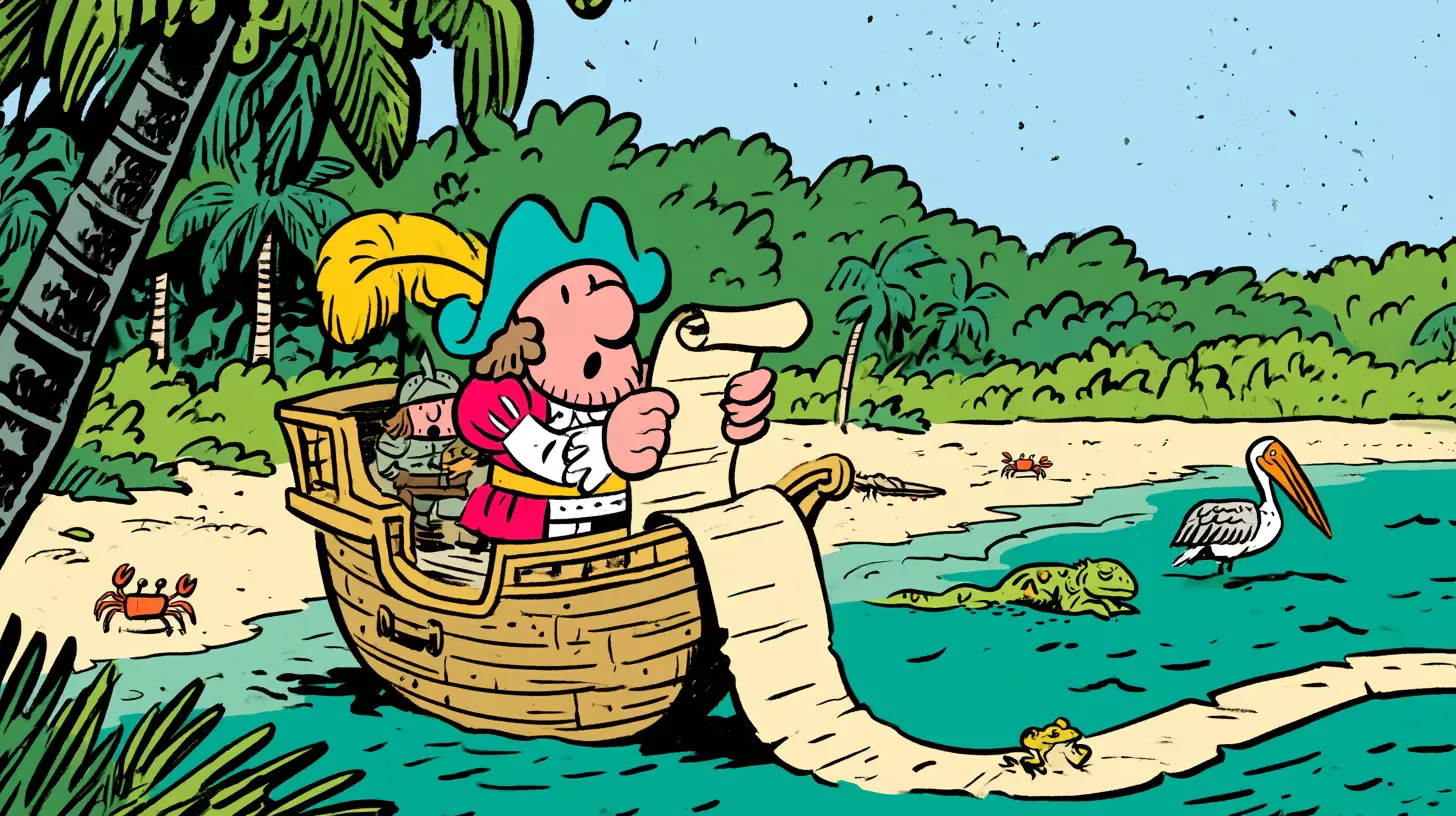
In 1519 Manso was named the first Inquisitor General of the Indies. So the first office of the Inquisition in the Americas belonged to Puerto Rico’s bishop. In Spain the Inquisition prosecuted something like 150,000 people over three and a half centuries and handed somewhere between 3,000 and 5,000 of them to the state to be burned, and in its first fifty years most of the people it killed were Jews who had converted and were suspected of not meaning it. Keep that in mind for later. The belief in a God who chooses has never belonged to any one people. All it needs is somebody to put on the outside: the Jews in Spain, the Taíno here.
IV. Puerto Rico, 1899
In 1898 the island changed owners, and the new owner brought a different God, or the same God with a different accent. In 1899, nine American Protestant denominations, Presbyterians, Methodists, Baptists, Congregationalists, Lutherans, the Disciples of Christ and a few others, met in New York and divided Puerto Rico among themselves into zones, so they could evangelize without stepping on each other’s toes. One of them wrote down the goal plainly: “the Americanization of the isla.” They opened schools in English for children who spoke Spanish, and hospitals, and churches, and by 1906 there were Puerto Rican converts describing the American invasion as part of God’s divine plan. The historian Samuel Silva Gotay called the missionaries the assimilationist arm of U.S. colonialism, and I don’t know how to read those records and call it anything else.
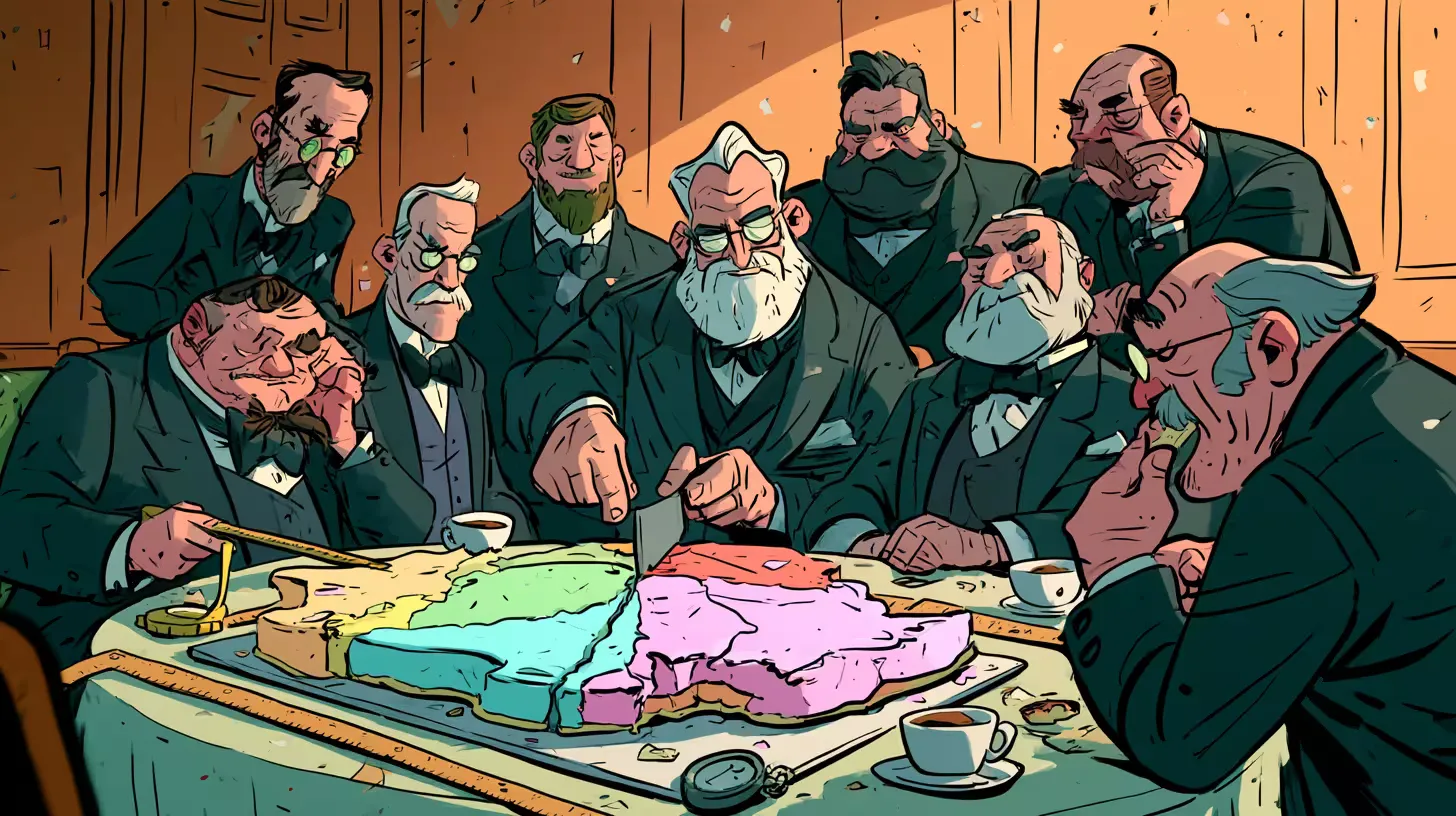
So we were colonized twice, and both times God came with the flag. I was born into that, in a colony, against my will as far as I’m concerned, and I grew up inside what the two Gods left behind: Catholic school on one side, and on the other an island where there’s a church on every corner and evangelical radio in every car and relatives who can quote scripture about anything and apply it to everybody but themselves. Depending on who’s counting, a third or more of Puerto Ricans today are evangelical or Pentecostal, which makes us, by some accounts, the most Protestant country in Latin America, and since 2019 there’s a party, Proyecto Dignidad, running on a Christian platform and pulling six or seven percent for governor. I wrote about what a share that small can still do in Notes on Puerto Rico: Sin Pie Forzao’.
I want to be careful here, because the people in those churches are my people, and a lot of them are doing the honest Christian thing, feeding the hungry, sitting with the sick, holding each other up after hurricanes when nobody else came. My problem is with the program, the way an island that was never allowed to govern itself was handed, twice, a God who governs everything, and a belief where somebody is always chosen and somebody is always damned, and the verdict always comes from outside and above, from Madrid, from New York, from heaven. When I say Puerto Rico is a captive state for this belief I mean that literally: it arrived with the conquerors, both times, and it stayed after they changed the flag.
V. The same idea, in bigger rooms
I opened Threads on a Sunday afternoon and the first three things in my feed were videos of maimed children in Gaza, served to me between memes, and I closed the app and wrote, fast and angry, that if God existed things like this would not happen at all. I still feel that, and I also know it’s the weakest argument I have, because the believer’s answer is ready and it’s a good one: people did this. Fine. I agree. It has always been us. So let’s look at the people, and at what they said they were doing, and in whose name. And the numbers don’t need my feed. By a UN count, at least 20,179 children were killed in Gaza between October 2023 and October 2025, and UNICEF says that since the ceasefire roughly one more child has been killed there every day. In September 2025 a UN commission of inquiry concluded that Israel has committed genocide in Gaza and named the prime minister among those who incited it. Israel rejects the finding.
On October 28, 2023, as ground troops went into Gaza, the prime minister of Israel told the country: “You must remember what Amalek has done to you, says our Holy Bible. And we do remember.” Amalek is the people God tells King Saul to destroy completely in the first book of Samuel, men and women, children and infants, even the animals. His office later said he meant Hamas and the atrocities of October 7th, and South Africa put the quote in its genocide case at the International Court of Justice anyway, because a head of government reaching for that verse at that moment is doing something, whatever he meant by it. That’s the belief in a head of state’s mouth: a God who chooses, an enemy who was not chosen, and a verse that pre-authorizes what comes next, a literal genocide.
Now watch the same belief show up somewhere else. In 2013 Pew found that 82 percent of white American evangelicals believe God gave the land of Israel to the Jewish people, twice the share of American Jews who said the same. A lot of that support runs on an end-times theology in which the modern state of Israel is a stage in a prophecy that ends, in many versions, with a few Jews converting and the rest damned: support a people’s state in this life, expect them to burn in the next. The largest pro-Israel organization in the United States, Christians United for Israel, is Christian, and its founder, the Texas pastor John Hagee, once preached that God sent Hitler as a “hunter” to drive the Jews back to the land; when the sermon surfaced in 2008 he said his words had been twisted. I’ve only heard this theology on the news, never from a pulpit, and if I’m wrong about how far it reaches, I’m wrong, but the sermons are on the record, and the belief is the same one: God chose a people, and your fate depends on how you treat them.
And now remember the Inquisition, and who it burned first: Jews, converted Jews, suspected of not meaning it. The same book, the same belief, and for most of two thousand years Christians counted the Jews among the damned. Now, in one government’s hands, the belief points the other way, at Palestinians, and the Christians cheering loudest from America believe that at the end of time most Jews will be counted among the damned again.
The easiest mistake in the world is to blame a whole group, a people, a religion, a nation, for what some of its members did, and I know how easy it is because I made that mistake myself. The afternoon I saw those videos I wrote in my journal about an army and a people in the same breath, and I called them death incarnate, and it felt clean and righteous and final, which is exactly how it’s supposed to feel, and that’s the problem. That sentence was the exact thing I’m trying to kill, coming out of my own hands: one group of human beings sorted into the damned, by me, in the name of the children I was grieving.
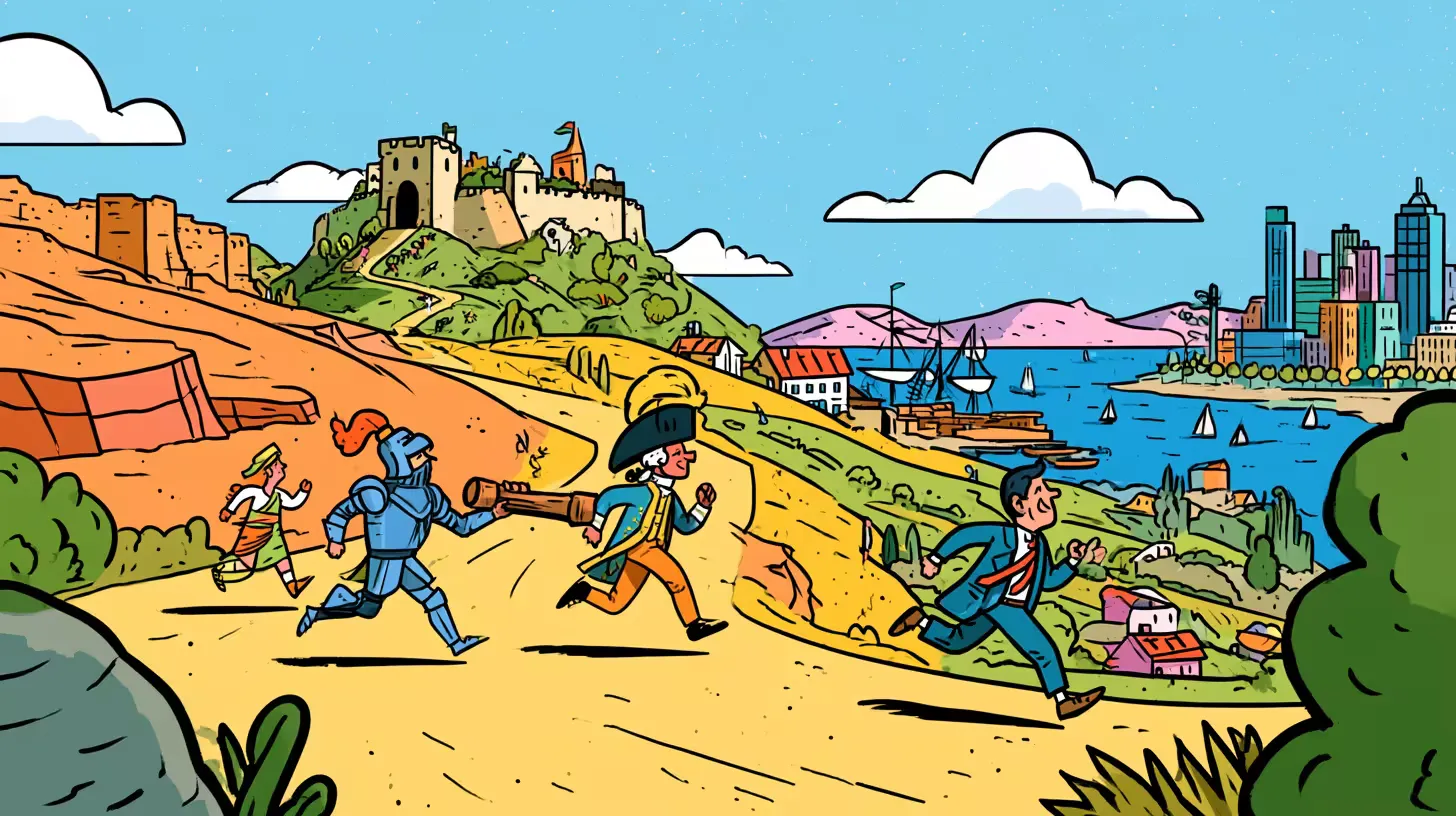
How do I know the problem is the belief and not any particular people? Because it keeps changing hands, and once you start following it you can’t stop, and I want you to feel how long it goes, because the length is the argument. Joshua takes Canaan and the text says God told him to leave nothing alive that breathes. The Mexica walk south for generations because their god Huitzilopochtli chose them, found their city where he said, and feed him the hearts of captives taken in war. The Chinese emperor rules by the Mandate of Heaven and whoever overthrows him had it all along. In 1096 crusaders march toward Jerusalem shouting God wills it and stop on the way to massacre the Jews of the Rhineland. In 1209 at Béziers, according to a monk writing years later, a papal legate told the crusaders to kill them all, God will know his own; historians doubt he said it, and the town was massacred anyway. The Almohads give the Jews and Christians of Spain and North Africa conversion, exile or death, and a young Maimonides runs. In 1452 and 1493 popes sign bulls that hand the lands and bodies of non-Christians to the kings of Portugal and Spain, and in 1492 Spain expels its Jews and in 1609 the descendants of its Muslims. In 1572 Catholics in Paris murder Huguenots in the streets for days, and in 1649 Cromwell’s Protestants take Drogheda and he calls it the righteous judgment of God upon barbarous wretches. Across Europe and in Salem tens of thousands of women hang and burn as witches. For thirty years Catholics and Protestants turn the middle of Europe into a graveyard. Preachers in the American South read the curse of Ham as God’s permission for slavery. Manifest Destiny says Providence allotted the continent, and the people already on it are in the way. In 1838 Boer settlers make a covenant with God before Blood River, and the same idea of a chosen people grows up into a Dutch Reformed theology of apartheid. In 1850 a man in China who believes he is the younger brother of Jesus starts a war, the Taiping, that kills more than twenty million people. In 1857 Mormon militiamen kill a wagon train of emigrants at Mountain Meadows. Imperial Japan makes its emperor a living god and sends boys to die for him. German soldiers march into two world wars with Gott mit uns on their belt buckles. In 1947 India and Pakistan are split by religion and somewhere between hundreds of thousands and two million people die in the partition. In 1992 a Hindu mob tears down the Babri mosque, in 2002 Gujarat burns, and more than a thousand people die, most of them Muslims. In 1995 Serb forces separate the Muslim men and boys of Srebrenica and kill about eight thousand of them. In northern Uganda a man named Joseph Kony calls his army the Lord’s Resistance and kidnaps children into it. In 2014 the Islamic State declares a caliphate and tries to wipe out the Yazidis. In 2017 Buddhist monks in Myanmar preach that the Rohingya are a threat, and more than seven hundred thousand of them flee. In 2021 men storm the U.S. Capitol carrying banners that say Jesus saves. Jews, Christians, Muslims, Hindus, Buddhists, Mexica, Mormons, Boers, emperors, popes, prophets and a Taiping king, on nearly every continent, hunter and hunted swapping places over and over for three thousand years, and the sentence never changes: God chose us, and not you. Anything that can be picked up by one side, then the other, then the first side again, can’t be a trait of anybody. It’s a tool, and it works the same in any hand.
And I owe you one more honest thing, because it weakens my own argument. This way of sorting people doesn’t even need God. In the twentieth century the Soviet Union and the Khmer Rouge, both officially atheist, threw God out and kept the sorting anyway: instead of the saved and the damned they had the people and the enemies of the people, decided by class, and millions died in labor camps and killing fields the same way people had died under the old verdicts. So getting rid of the God who chooses is not enough on its own. Nietzsche saw that coming too. God is dead, he wrote, but people being what they are, there may be caves for thousands of years in which his shadow is still shown, and we still have to defeat the shadow. That shadow is the choosing. What has to go is the habit of dividing human beings into chosen and damned, no matter who does the dividing, and what has to replace it is something with no list at all.
There’s a second reason to name people instead of peoples, and it’s practical. Blaming a whole people protects the ones who actually did the harm, in two ways. First, it hides them: when a whole nation is guilty, no particular person is, and the man who quoted the verse disappears into a crowd of millions who never heard him say it. Second, it helps them recruit: the moment you tell an entire people they’re all guilty, their leaders get to turn around and say, see, they hate all of us, only we can protect you, and now that people has its own list of the damned, with you on it. Blaming a whole people keeps the cycle of chosen and damned going, one more turn.
That belief has never won over an entire people. In every group that claims it, some people refuse it, and inside every person there’s a part that refuses it too, me included. In that same Pew survey, most American Jews didn’t say God gave them the land. On my island there are Christians who feed their neighbors after every hurricane without asking who’s saved. In every army there are soldiers who refuse the order. So when you catch yourself blaming a whole group, the Jews, the Muslims, the Christians, the Americans, the Puerto Ricans, try a test, one I’m going to have to keep using on myself: replace the group’s name with “the people who.” The people who quoted the verse, the people who gave the order, the people who paid for it, the people who carried it out. If you can finish that sentence with specific people and specific acts, those are the ones to hold accountable. If you can’t, if all you have is the name of the group, then you were about to condemn people for who they are, which is exactly what the God who chooses does.
These are the people I’m accusing: the leaders who quote the verse, the preachers who sell the prophecy, the politicians who pay for what follows, and the commanders who carry it out. Jews, Palestinians, Christians and Muslims, as peoples, are not among them. Name those individuals, document what each of them did, and hold each of them responsible. That’s where accountability lives. The belief in a God who chooses belongs to no people. Anyone can pick it up. A Spanish bishop picked it up, a prime minister picked it up, a grandmother in her recliner picked it up, and each time it did the same thing: it sorted everyone into the chosen and the damned, and then it let the chosen do anything they wanted to the damned.
VI. How God kept dying for me
I’ve been saying “God is dead” all through this like it’s my line. It’s Nietzsche’s, from 1882. A madman runs into the marketplace in the morning with a lantern lit, shouting that he’s looking for God, and the people there laugh at him, because they already don’t believe, and he turns on them: “God is dead. God remains dead. And we have killed him.” And then he asks the question that I think most people skip: “Must we ourselves not become gods simply to appear worthy of it?”
He wasn’t celebrating. That’s the part I didn’t understand when I was younger. He was warning that everything built on top of God, the morality, the meaning, the whole architecture, would start to fall once people noticed nobody was holding it up, and that most of them hadn’t noticed yet. A hundred and forty years later I think he was right about the falling, and I think we filled the hole God left with the worst possible replacements: the nation, the market, the tribe, the brand, and, for a lot of people, the old God again, louder and more certain, precisely because they can feel it slipping.
Forty years before Nietzsche, Ludwig Feuerbach said something that I think is simpler and truer. God is humanity’s own best qualities, love, wisdom, justice, projected outward onto the sky and then worshipped as something foreign, so that we kneel to our own reflection and forget it was ours. Theology is anthropology, he said. I’d put it more bluntly: we made him up so we could feel adequate in a universe that’s too big for us. And the proof, for me, is the choosing. A God who chooses one group and damns the rest looks exactly like what a frightened tribe would invent, and nothing like what a universe would produce.
God was never alive for me, if I’m being exact about it. I stood up during misa as a kid because I already didn’t feel anyone there. And he died a few more times anyway, which I know doesn’t make sense, but it’s how it felt. On the morning of November 21, 1996, I was ten years old, sitting in class in Río Piedras, and I felt it. A propane line under a shoe store called Humberto Vidal had been cracked for years, and at 8:35 in the morning it exploded and killed thirty-three people. I didn’t understand it. I learned it slowly, from the news, and that’s when I started making connections: so this is what they’re talking about on television, this is what the news is. Five years later I was fourteen, in the school library with Mrs. Muñiz, watching the towers fall in real time, and I saw pure terror on an adult’s face for the first time in my life, and I didn’t understand that either, and I spent the next month figuring it out. Since then it has been the same education over and over, and I went looking for more of it, because that’s who I am, I read, I keep reading. Chattel slavery: something like twelve and a half million Africans forced onto ships across the Atlantic, bought and sold by Christians, by and large, some of them delivered to my own island. Hiroshima and Nagasaki: around 140,000 and 74,000 dead by the end of 1945. And then my own island as a laboratory. I grew up hearing that the CIA experimented on us, and when I went to check, I couldn’t find the CIA, and what I found instead was worse, because it’s documented. In 1956, in a housing project in Río Piedras, the first large human trials of the birth control pill, at a dose far higher than any pill today, on women nobody told about the risks, three of whom died with no autopsy. By 1965, about a third of Puerto Rican women of childbearing age sterilized, la operación. An American doctor, Cornelius Rhoads, writing from San Juan in 1931 that we were “the dirtiest, laziest, most degenerate and thievish race” and that he had killed eight of us, which investigators later said they couldn’t confirm, and a decade later he was running the Army’s chemical weapons experiments. Military herbicides, including an enhanced Agent Orange, sprayed on our forests in tests between 1956 and 1967. Death and rape and violence, and now genocide, streamed live. Every one of those, the explosion, the towers, the reading, was a funeral for a God I never believed in, and I think what was being buried each time was the small part of me that wanted to be wrong. This is hell on earth, and nobody is running it.
And closer to home. I watched my father turn into a religious fanatic, a man who talks about God and it comes out as sin, and then as hate, every time, and every time God died a little more. Nearly every hateful person I’ve met in my life has had God in their mouth while they did it: God this, God that. I know the base rate, to be fair: where I grew up and where I live now almost everybody is Christian, so of course the hateful ones are too, and so are some of the kindest people I know. Christ-like people, the ones who actually behave with these values, don’t have to speak about it. The difference I’ve seen is that the hateful ones reach for God to explain themselves.
Every time I catch a glimpse of something I’d be tempted to call God, it’s biodiversity, it’s color, it’s music, it’s laughter, it’s love. I have never once found it in the news, and very rarely in a sermon. What dies in this essay, then, is one particular God: the chooser, the judge, the someone who stands apart from everything and keeps a ledger. That someone has to go because of what he permits, because as long as people believe there’s someone up there deciding, somebody down here gets to claim they know what he decided, and what they claim, almost every time, is a list of who’s in and who’s out.
The madman’s question is the one I want to answer, and my answer is yes. The judge we’ve had enough of, God knows. We become the other part, the love.
VII. Defining love, and testing the book
If I’m going to retire a God and keep love, I owe you a definition, because “love” is the most abused word on the planet, and the grandmother in my living room would tell you, sincerely, that everything she said that morning was love.
Mine is this: love is wanting the best for each individual, without attachment. And “the best” can be measured, more or less: the person’s own flourishing, as objectively as we can get it, their health, their safety, their growth, their freedom to choose. Three parts of it carry the weight. Each, because love for one person can’t be paid for with harm to another, which rules out any chosen people at all. The best, meaning their best, their flourishing, measured on them and on nobody’s beliefs about them. And without attachment, meaning no condition: not obedience, not conversion, not even love returned. That last one is what separates my love from hers. She wants the best for the kids too. What she attaches is a condition, believe or burn, and love with a condition is a transaction with a threat inside.
Love, by the way, does not mean a lack of conflict. That’s stupid. The table flipper is in the book too. Love isn’t kumbaya. There’s self-love in it and love for other people, and it takes rigor, and honesty, and acting with integrity when integrity costs you something.
Now run the book through it. I’m not keeping the Bible, it has no authority in what I’m proposing, none. But I’m also not going to pretend there’s nothing in it, because some of it was written by people who understood love better than the institutions that later owned it. So everything gets the same test, every passage, from every tradition, and it either passes or it doesn’t. I’ll start with the Bible, because it’s the book I was raised inside and the one that came to my island twice, but it doesn’t get special treatment, in either direction.
What passes: love your neighbor as yourself, and in Leviticus, of all places, love the foreigner as yourself, because you were foreigners once too. The Samaritan, stopping on the road for the man the religious people walked past. Love your enemies. Do justice, love mercy, walk humbly, which the prophet Micah said in one line and which is more or less the whole thing. Let whoever is without sin throw the first stone, and then, when nobody throws, neither do I condemn you. I was hungry and you fed me, I was a stranger and you took me in, and whatever you did for the least of them you did for me, which is the closest the book gets to saying your neighbor is you. Take the plank out of your own eye before you go looking for the speck in your brother’s. Faith without works is dead, which is the gap between talk and action written down two thousand years before I noticed it at school. Neither Jew nor Greek, slave nor free, male nor female, one humankind, even if Paul attached a condition to it. Love that is patient and kind and keeps no record of wrongs. The whip in the temple, aimed at the money. Don’t pray on the street corners to be seen, the way the hypocrites do, go into your room, close the door, and do it where nobody is watching, one I didn’t know was in there until I started writing this, and the one I see broken most often, and most loudly. Whoever says they love God and hates their brother is a liar. And the one I would have carved in stone if I’d been asked, three words, sitting in a short letter near the back of the book the whole time: God is love.
What fails: no one comes to the Father except through me, and whoever does not believe will be condemned, which is love with a condition and a threat, only one door in and everyone outside it condemned, and the exact sentence the grandmother in my living room lives inside. Slaves, obey your masters. Wives, submit to your husbands. Happy is the one who takes your infants and dashes them against the rocks, which is in the Psalms, which people sing. And to your descendants I give this land, which is the most interesting one to me, because in its own time, a promise of land to the children of one wandering family probably made a kind of sense, the way a lot of tribal things made sense three thousand years ago, and today it’s obsolete as a deed, and in the wrong hands it’s a license to take land from the people already living on it.
And the test isn’t only for our grandmothers’ book, because if it were, it would just be one more way of choosing. Run the others through it and the same thing happens. What passes shows up nearly everywhere, almost word for word. Confucius, asked for one word to live by, said reciprocity: what you don’t want done to yourself, don’t do to others. Hillel, asked to teach the whole Torah standing on one foot, said what is hateful to you, don’t do to your neighbor, the rest is commentary. The Mahabharata says one should never do to another what one regards as injurious to one’s own self. A Buddhist verse says hurt not others in ways you yourself would find hurtful. The Quran says it was ordained for the Children of Israel that whoever saves a life, it will be as if they saved all of humanity. People who never met, on different continents, centuries apart, kept arriving at the same sentence, which tells me the sentence was never a revelation. It’s what people figure out when they look at each other honestly.
What fails shows up everywhere too. The Quran also says to fight those among the people who were given scripture who don’t believe, until they pay the tax, fully humbled, and a hadith says whoever changes his religion, kill him. The Laws of Manu say that a man of low birth who insults a man of high birth should have his tongue cut out, and they sort human beings by birth into the pure and the untouchable. The Mahavamsa, the great chronicle of Sri Lankan Buddhism, has a king grieving after a battle that killed a great host, and holy monks consoling him that he had only killed one and a half human beings, because the rest were “unbelievers and men of evil life,” “not more to be esteemed than beasts.” Different gods, different languages, the same two sentences. One says your neighbor is you. The other says some people don’t count. Every tradition I know of has both, and every tradition has to choose, the same way the Bible’s readers had to choose between the father and the son.
Look at what that leaves. Almost nothing about who God is, except that one line, God is love. Everything else that passed, in that book and the others, is about how to treat each other.
VIII. What I’d put in God’s place
I’m an atheist. I don’t believe anybody is up there. I’m keeping the word God anyway, on purpose, for everyone who does believe, because the word isn’t going anywhere, and if it’s going to stay, it might as well mean something that doesn’t hurt anybody.
So what would I put in the place of the one who chooses? Everything. The good, the bad, the problems, the evil, the planet, the universe, what we can see and what we can’t, what we think and what we’ll never think. If there is anything worth calling God, it’s the whole thing, and if it’s the whole thing it isn’t a someone, it doesn’t watch, it doesn’t want, it doesn’t judge, it doesn’t choose. There is no chosen people inside everything. There’s no promised land inside everything, because it’s all the same land. There’s no damned. There is only us.
I’m not the first to say this. Spinoza said “God, or Nature” in the 1600s, and his own community in Amsterdam had already cast him out for his heresies. Einstein said he believed in Spinoza’s God and not in one who concerns himself with the fates and actions of human beings. If everything is one, your neighbor is you, the same stuff, the same whole, arranged differently. You don’t need a commandment to love your neighbor once you see that. You just need to see it.
Except seeing it has never been enough, and my own evidence says so. The Laws of Manu come out of the same tradition as the Upanishads, where a father teaches his son that the whole world has one essence and tells him, you are that. The Mahavamsa comes out of a tradition that teaches nothing exists on its own, that everything arises out of everything else. People inside both of them sorted human beings anyway, by birth, by belief, into the ones who count and the ones who don’t. So oneness doesn’t protect anybody by itself. It gives the reason.
And yes, everything includes the evil. It includes the man who quotes Amalek, and the soldier, and the Inquisitor. That’s the hardest part of this for me and it’s hard to resolve it. I have not. What I can say is that they’re captive. The soldier and the Inquisitor are part of everything, and they’re captured, the same way the grandmother is, the same way my island was (is). It’s the same capture at very different prices: hers costs a morning, and whatever the kids carry out of it, and theirs is paid in bodies. That’s what this obsolete God does: he captures everybody, the ones who pull the trigger and the ones in front of it, and he tells the first group it’s holy work. I don’t absolve them. Being captured explains how a person got there, and what they do once they’re there is still theirs. I know that because the same capture produces different people. Two soldiers hear the same verse from the same commander, and one pulls the trigger and one refuses. Two women sit in the same church every Sunday, and one spends breakfast condemning a toddler and the other spends it feeding her neighbors. If capture decided everything, those pairs would act the same, and they don’t. So every whole adult is responsible for what they do, captured or not, and I believe that about myself too.
But holding people responsible one at a time isn’t enough, because the belief keeps producing more of them. You can put one Inquisitor on trial and the belief will train the next one before the trial is over. So there are two jobs, and they don’t cancel each other: hold each person accountable for what they did, and kill the God who keeps capturing them.
And look at what changes when you take away the idea of someone up there who planned it all. When a believer looks at suffering, one of two things has to be true: God wanted it, or God allowed it for a reason. Either way, somebody gets to say the victims had it coming, and we’ve already seen where that ends: a text read from a ship, declaring that the deaths will be your fault. Take the planner away and that sentence has nowhere to stand. Suffering without an author is tragedy. Nobody deserved it, not the children in Gaza, not the thirty-three people in Río Piedras, not the women in that housing project. The people who did the harm can’t say God wanted it, either. They lose their alibi. What’s left is us: human beings who did it, human beings it was done to, and human beings who have to answer for it, with no God to hide behind, no verse to point to, and nobody coming from above to fix it, which means it’s ours to fix.
In practice it’s plain, almost boring, because the version of God that hurts people is always dramatic, and love is mostly maintenance. Take the four things my definition of love measures, health, safety, growth, and freedom to choose, and turn them into what every single person is owed. Everybody gets to be healthy, body and mind, which means a doctor when you’re sick and someone to talk to when your head is the thing that’s sick. Everybody gets home safe, which means nobody gets bombed, shot, deported into danger, or beaten in their own house. Everybody gets the education they want, as much as they want, because growth is what a person does with their life when nobody is standing on them. Everybody gets to love whoever they love and vote however they vote, because a love or a vote somebody else approves for you isn’t yours. Everybody gets to become the best version of themselves, and we, being part of the whole thing, nurture that. We make it happen, with our taxes and our votes and our clinics and our teachers and our neighbors, because there’s nobody else up there to do it. Nobody is coming. That used to scare me.
Most of it was written down in 1948, in the Universal Declaration of Human Rights, and adopted by the United Nations without a single vote against. It didn’t work, or it didn’t work enough, and I think I know why. The Declaration was never legally binding, which is part of it, but the deeper problem is in how it was made. While it was being drafted, Jacques Maritain summed it up in 1948: “we agree about the rights but on condition that no one asks us why.” The drafters and the thinkers could agree on the list, and they left the reason out, on purpose, because every country at the table had a different God, or none, and they would never have agreed on a why. So the rights stood on the signatures of governments, and a right that a government signed is a right that a government can ignore, and most of them have.
The reason is what I’m trying to give it. Everything is one thing, and your neighbor is you, the same stuff arranged differently, so every person is owed all of this, and the ones who owe it are all of us. The universe doesn’t owe anybody anything. We do. When I make sure a stranger’s kid gets to a doctor, I’m taking care of the same whole I’m made of, and when a government bombs a hospital, it’s the whole wounding itself. That reason needs no God to hand it down, no signature to hold it up, and no agreement about anything except what we can all see: that we’re in this together, all the way down.
It won’t be beautiful. It won’t be perfect. People will still fight, still love the wrong person, still get jealous and hurt each other in all the ways humans do. But it will be humans doing it, honestly, instead of humans doing it and signing God’s name at the bottom.
I don’t pray, but some mornings I say things to the universe. I don’t ask for anything. I declare. This is one of those.
IX. Back to the living room
The night before one of those mornings, after she had told me that my love was worth nothing, I stood up, crossed the room, and hugged her. A big hug, and I was crying, and I kissed her twice and asked for her bendición.
I didn’t do it to win anything, and I didn’t do it to lose. I was crying for her, for the fear I could see she lived in, for whatever had happened to her, a long time ago, that made a God like that feel like safety. I think it was the same thing I was doing as a kid standing up in misa: respect for her, and respect for myself, at the same time, in the same body. I wasn’t going to kneel to her verdict, and I wasn’t going to hate her for having one. And I didn’t preach back at her. Nobody in that moment needed another sermon.
And I’ve noticed something about the scale of these things. In a living room, the belief can bend. Once, when I stopped arguing and simply asked her, calmly, to leave the violence out of it when the children were in the room, she stopped, and she apologized. In a living room, a person can be reached, because you can hug her. The belief only becomes impossible to move at the scale where nobody can hug anybody: a government, an army, an empire, a denomination dividing an island on a map in New York.
There’s one more thing I’ve noticed, and it surprised me when I finally saw it. The people I know who actually live this, the ones who feed people and sit with the sick and hold a room together when it’s falling apart, almost never talk about it. They don’t have to. The kid standing up at misa didn’t make a speech. The hug didn’t come with a sermon. And the man in the Gospels who said to pray with the door closed seems to have known it too. The people who talk about God the loudest are, so often, the ones covering the gap between what they say and what they do, and the ones who carry what’s good in him mostly don’t announce it at all. Lo que se ve no se pregunta: what you can see doesn’t need to be asked about.
What’s left is everything, and everything includes the grandmother and the soldier and you and me, and there’s nobody up there to love any of it for us. We’ll have to do it ourselves, quietly, and it will show.
Sources
III. Puerto Rico, 1512
- Taíno creation myths, written down by Ramón Pané. Wikipedia
- Indigenous mitochondrial DNA, about 61 percent (Juan Martínez-Cruzado). ICT News
- The Requerimiento, 1513. Simon Fraser University, PDF
- Alonso Manso. Wikipedia
- The Spanish Inquisition. Wikipedia
IV. Puerto Rico, 1899
- Nine denominations divide the island, 1899. Christian Century
- Proyecto Dignidad. Wikipedia
V. Gaza, Amalek, the pulpits
- Children killed in Gaza. 20,179 through October 2025, and about one a day since the ceasefire. UNICEF USA · Al Jazeera on UNICEF, August 2026
- UN commission of inquiry. Genocide finding, 16 September 2025. OHCHR · CNN
- The Amalek quote, 28 October 2023. ABC News (Australia)
- Pew, 2013. 82 percent of white American evangelicals, 40 percent of American Jews. Pew
- The end-times script. Political Research Associates
- Christians United for Israel, and John Hagee’s “hunter” sermon. In 2008 he said the words had been twisted. Wikipedia · Christianity Today · Slate
V. The catalog
The relay in section V, in the order it is told.
- Joshua 10:40
- The Mexica migration, and Huitzilopochtli
- The Mandate of Heaven
- The Rhineland massacres, 1096
- Béziers, 1209. The “kill them all, God will know his own” line is Caesarius of Heisterbach, dixisse fertur. Historians doubt it was said. The town was massacred anyway. Arnaud Amalric
- Almohad persecution, and Maimonides
- Dum Diversas, 1452, and Inter caetera, 1493
- The Alhambra Decree, 1492, and the Morisco expulsion, 1609
- St. Bartholomew’s Day, 1572
- Cromwell’s letter on Drogheda, 1649
- Witch trials in Europe, and Salem, 1692
- The Thirty Years’ War
- The curse of Ham, read as permission for slavery
- Manifest Destiny (John O’Sullivan, 1845)
- The Blood River vow, 1838, and apartheid theology
- The Taiping Rebellion
- Mountain Meadows, 1857
- State Shinto
- Gott mit uns
- Partition, 1947
- The Babri mosque, 1992, and Gujarat, 2002
- Srebrenica, 1995
- The Lord’s Resistance Army
- The Islamic State and the Yazidis, 2014
- The Rohingya, 2017
- January 6, 2021, including banners that said “Jesus Saves.” Christian Chronicle
VI. How God kept dying
- Nietzsche, The Gay Science. §125, the madman in the marketplace. German History in Documents and Images. §108, the shadow in the caves: “God is dead; but given the way of men, there may still be caves for thousands of years in which his shadow will be shown.” Walter Kaufmann’s translation.
- Ludwig Feuerbach. Stanford Encyclopedia of Philosophy
- The Humberto Vidal explosion. 21 November 1996, 8:35 a.m., 33 dead. Wikipedia
- The transatlantic slave trade. About 12.5 million people embarked. Atlantic slave trade · SlaveVoyages
- Hiroshima and Nagasaki. About 140,000 and 74,000 dead by the end of 1945. City of Hiroshima · Bulletin of the Atomic Scientists
- The pill trials in Río Piedras, 1956. Wikipedia · PBS American Experience
- Sterilization. 34 percent of Puerto Rican women of childbearing age by 1965. Wikipedia
- Cornelius Rhoads. The 1931 letter, and the investigations that followed. Wikipedia
- Herbicides on Puerto Rican forests, 1956–1967, including an enhanced Agent Orange. Fort Detrick and Dow. Rainbow Herbicides · Military Times
VII. Other traditions
Checked 23 September 2026.
What passes
- Analects 15.23 in James Legge’s numbering (15.24 in others). “Is not reciprocity such a word? What you do not want done to yourself, do not do to others.” Legge
- Hillel, Talmud Shabbat 31a. “What is hateful to you, do not do to your fellow: this is the whole Torah; the rest is the explanation; go and learn.” Sefaria
- Mahabharata, Anushasana Parva, section CXIII (Kisari Mohan Ganguli). “One should never do that to another which one regards as injurious to one’s own self.” Sacred Texts
- Udanavarga 5:18. “Hurt not others in ways that you yourself would find hurtful.” The Golden Rule
- Quran 5:32, Sahih International. The verse says this was ordained for the Children of Israel. Quran.com
What fails
- Quran 9:29, Sahih International. “Fight those who do not believe… from among those who were given the Scripture, until they pay the tax, willingly submitting, fully humbled.” Quran.com
- Sahih al-Bukhari 6922. “Whoever changed his Islamic religion, then kill him.” Sunnah.com
- Manusmriti 8.270. “If a once-born person insults a twice-born one with gross abuse, he should suffer the cutting off of his tongue; as he is of low origin.” Wisdom Library
- Mahavamsa, chapter 25 (Wilhelm Geiger). “Only one and a half human beings have been slain here by thee… Unbelievers and men of evil life were the rest, not more to be esteemed than beasts.” Vipassana.com
VIII. In place of the chooser
- Spinoza. Stanford Encyclopedia of Philosophy
- Einstein, 1929, on Spinoza’s God. Jewish Telegraphic Agency
- Chandogya Upanishad 6.8.7. Uddalaka to Svetaketu: tat tvam asi, “you are that.” Mahāvākyas · Chandogya Upanishad
- The Universal Declaration of Human Rights. Adopted 10 December 1948, 48 to 0, with 8 abstentions. Not legally binding. Drafting of the UDHR
- Jacques Maritain, introduction, UNESCO, Human Rights: Comments and Interpretations, UNESCO/PHS/3(rev.), 25 July 1948, page 1. Canopy Forum · Mary Ann Glendon, First Things


Leave a note
Share a thought or ask a question in the comments.
For a private note, you can email me at antonio@builds.software.
Comments will load when you reach this section.